EVENITY® is a prescription medicine used to treat osteoporosis in women after menopause who are at high risk of fracture, (See More) or cannot use another osteoporosis medicine or other osteoporosis medicines did not work well.


For women, building and maintaining strong bones becomes increasingly important after menopause.
Postmenopausal osteoporosis is a progressive disease. Also, one bone fracture can lead to another, and each fracture can make a significant impact on your life.


Postmenopausal osteoporosis (PMO) is a progressive disease, which means it can continue to weaken your bones over time. Early intervention may help reduce your risk of fractures.
If you have low bone mass when you reach menopause, or other risk factors that contribute to bone loss, your risk for developing osteoporosis is higher.
For some women, bone loss can happen fast. You lose bone quickly and your risk for breaking a bone rises.
Over time, natural elements weaken the frame and the house becomes vulnerable, even if everything appears fine on the surface.
Osteoporosis works the same way, weakening your bones silently over time, without symptoms, and increasing your risk of a fracture.
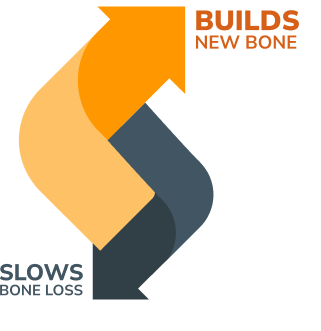
EVENITY® fortifies the frame in two ways: it builds new bone and helps slow bone loss, reinforcing the frame and reducing risk of serious damage.
Postmenopausal osteoporosis is a condition where bones become weaker after menopause because the body breaks down bone faster than it rebuilds it, increasing the risk of fractures. It develops silently, which makes early screening important.
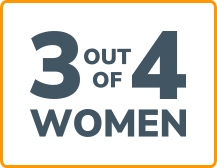
3 out of 4 women aged
≥55 years with PMO
at high risk for fracture will
break a bone in their lifetime
Every ~20 seconds a woman 55 or older in the US breaks
a bone due to osteoporosis
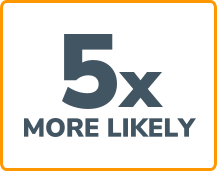
After an osteoporosis-related fracture, you’re 5x more likely to suffer another within 1 year
The following risk factors may increase your risk for osteoporosis and related fractures.
Per the American Association of Clinical Endocrinology (AACE), a bone density test is recommended for all women age 65 and older, and for women ages 50 to 64 who have certain risk factors, including:
Talk to your doctor about setting up a bone density (DXA) screening.
The most common bone density test is called a DXA scan, a quick, noninvasive, and painless test that uses low-dose X-rays to measure the amount of minerals in your bones.
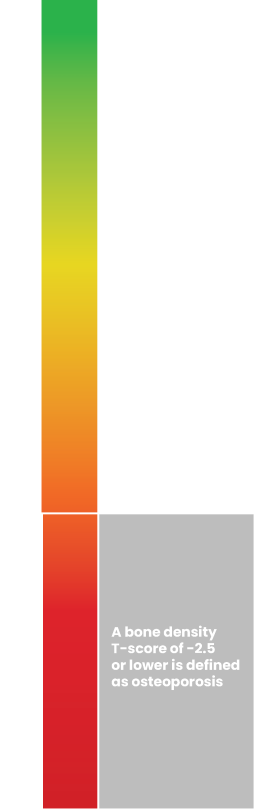
The results of a DXA scan are converted into a T-score, which represents how dense your bones are compared to the average bone density of healthy young adults. A T-score less than or equal to -2.5 is an indicator of postmenopausal osteoporosis.
Your doctor will assess your fracture risk by analyzing your T-score, and by taking into consideration any other risk factors you may have. If you are diagnosed with osteoporosis, your doctor will outline treatment options for you.
Bone density is a measurement of the amount of minerals, namely calcium, in your bones. A higher density usually means stronger bone.
Bone structure is more about the quality, or architecture, of your bones.
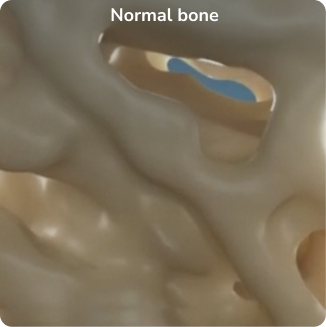
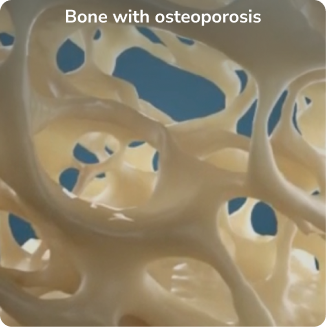
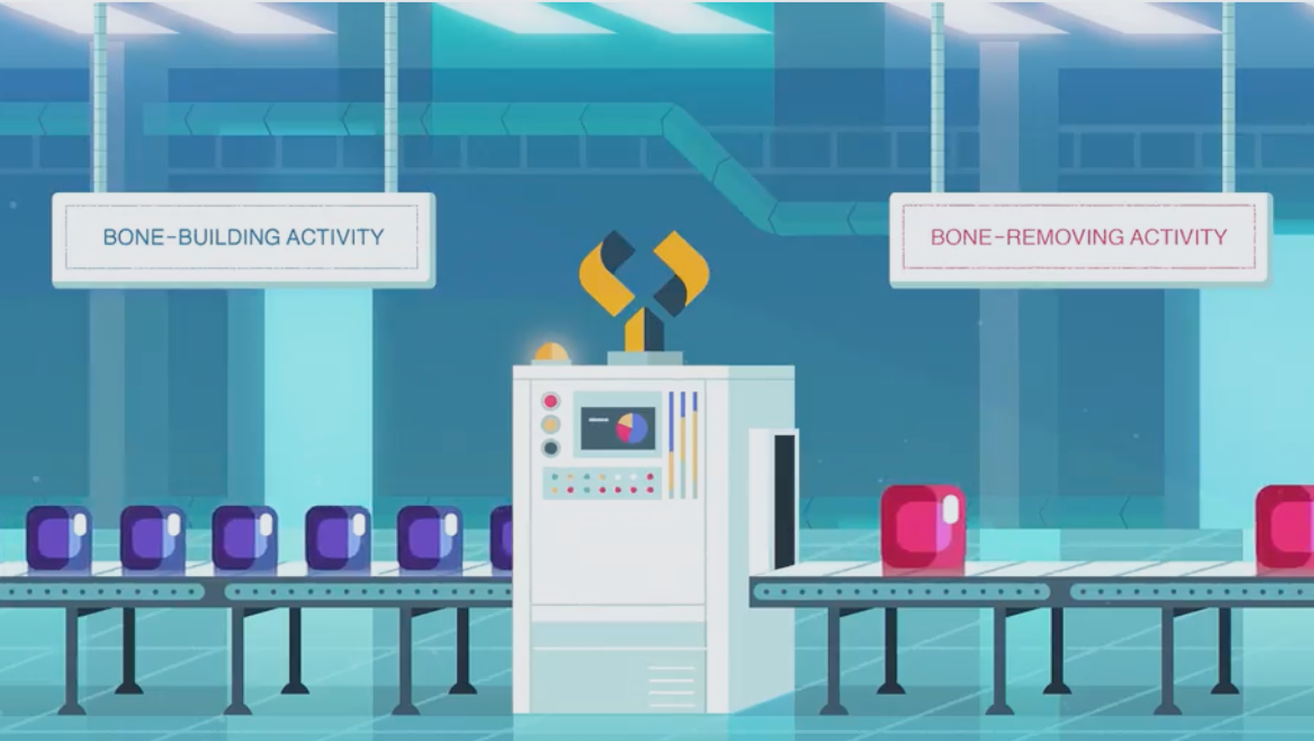
Osteoporosis develops when bone breakdown happens faster than bone formation, creating an imbalance that weakens the skeleton over time—especially after menopause.
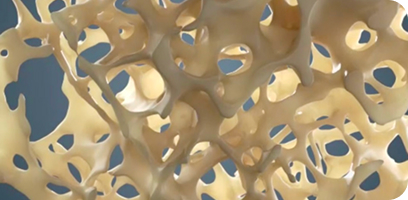
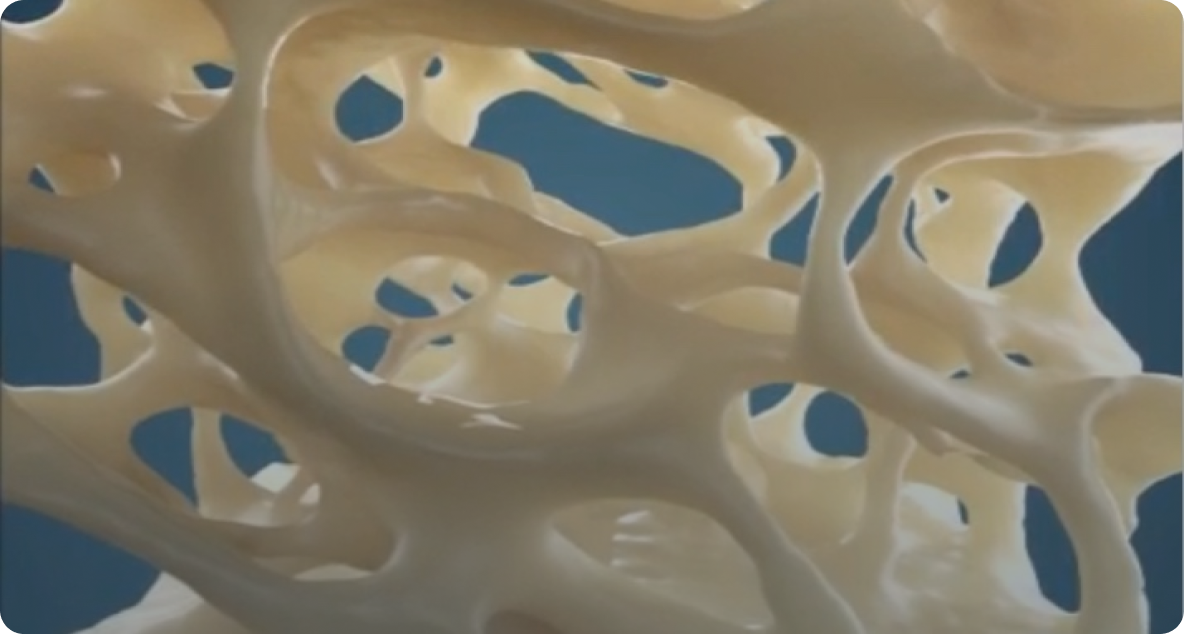
For illustrative purposes only. These images are 3D renderings of an untreated normal bone and untreated osteoporotic bone, based on bone biopsy images provided courtesy of Dr. David Dempster.
Bone resorption is a natural process happening inside all our bodies. Cells called osteoclasts break down bone and release minerals like calcium into the bloodstream. In a person with a healthy level of bone density, bone resorption is happening at an equal or lower rate than bone formation.
But after menopause, the risk that bone resorption can happen at a higher rate than bone formation rises, and that in turn increases a woman’s risk for developing osteoporosis.
In addition to starting treatment, you can make lifestyle changes in a few key areas:

Making changes to your diet can help strengthen your bones, specifically by increasing your intake of:
Talk to your doctor about the right amount for you.

Help improve your balance and build bone strength by:
Always talk to your doctor before starting a new exercise program.

A step you can take to improve your bone health is cutting back on, or ideally, eliminating:
Postmenopausal osteoporosis can be managed with medications that either slow bone loss or build new bone, along with lifestyle changes and follow‑up testing.
Learn how the different treatments work below:
Anabolic treatments stimulate bone formation.
Antiresorptive treatments slow bone loss.
Bone-building treatments reduce fracture risk further and faster than bone-preserving treatments.
*The 2024 American Society for Bone and Mineral Research/Bone Health and Osteoporosis Foundation (ASBMR/BHOF) position statement on goal-directed osteoporosis treatment recommends anabolic therapy as initial treatment for patients at very high risk for fracture, guided by BMD and fracture history, to rapidly maximize BMD and reduce fracture risk. This position statement represents the consensus of the ASBMR/BHOF Task Force on goal-directed osteoporosis treatment, based on interpretation of the best evidence available. The position statement is not a clinical guideline.


EVENITY is the only treatment that works with your body’s natural ability to build new bone while helping preserve the bone you already have by:
Get a more in-depth look at how EVENITY works to help strengthen your bones.


After menopause, bone loss can happen fast. Women often receive their osteoporosis diagnosis only after they’ve broken a bone. That’s why early diagnosis is so important; the sooner you know, the better equipped you’ll be to reduce your risk.
If you are diagnosed with osteoporosis, and your doctor starts you on treatment, it’s critical to take your treatment as directed by your doctor.


Having an open, honest conversation with your doctor is key. Ask your doctor about steps that can be taken to reduce your risk of a fracture due to osteoporosis.
If you’re unsure where to start—download a doctor discussion guide to learn which questions to ask.
You are about to leave the EVENITY.com website and enter a website operated by a third party. The website you are about to enter is sponsored by Amgen Inc. and provided by a vendor, MediFind. This optional MediFind tool is developed independently by MediFind and intended to help patients locate clinical providers who have experience treating relevant conditions. The MediFind tool is not intended to provide medical advice or a referral to a particular physician. Amgen, Inc. does not control or endorse this third-party website, including the MediFind tool, the results it returns, the terms of use and the privacy policy. Amgen, Inc. is not responsible for the content or accuracy of the information compiled and maintained by MediFind or for the actions of any physician found through the MediFind tool, and reliance on any information provided by the MediFind tool is solely at patients’ own risk. Amgen, Inc. has not entered into any agreement with any doctor affiliated with the MediFind tool to render any treatment or care to any patient, and has not evaluated the credentials, experience, or expertise of any physician affiliated with or referred through MediFind. Patients should discuss the risks and benefits of any treatment with a qualified physician.
Click “OK” to proceed or “Cancel” to return to EVENITY.com.
By clicking OK below, you acknowledge that you have read and reviewed the information above.
Work with your doctor to map out a bone-strengthening plan. This would include:
It’s important to have an open conversation with your doctor so that he or she can properly assess your risk level and help you move forward by mapping out a plan to reduce your risk as much as possible via nutrition, exercise, activity, and treatment.
Any time you start a new treatment, there may be side effects to consider. Talking with your doctor about how you are feeling right from day one can be a big help to manage anything that may come up.
What is the most important information I should know about EVENITY?
EVENITY can cause serious side effects, including increased risk of having a heart attack, stroke, or death from a cardiovascular (heart or blood vessel) problem. Call your healthcare provider or get emergency help right away if you have any of these symptoms: symptoms of heart attack, which may include: chest pain or pressure; shortness of breath; feeling light-headed or dizzy; or symptoms of stroke, which may include: headache; numbness or weakness in face, arm, or legs; difficulty talking; changes in vision or loss of balance. Before you receive EVENITY, tell your healthcare provider if you have had a heart attack or stroke, especially if it has happened in the past year.
Do not receive EVENITY if you: have low blood calcium; or are allergic to romosozumab or any of the ingredients in EVENITY.
Before receiving EVENITY, tell your healthcare provider about all your medical conditions, including if you:
What are the possible side effects of EVENITY?
EVENITY may cause serious side effects, including:
Serious allergic reactions have happened in people who receive EVENITY. Call your healthcare provider or go to the nearest emergency room right away if you have any symptoms of a serious allergic reaction including: rash; hives; swelling of the face, lips, mouth, tongue, or throat which may cause difficulty in swallowing or breathing.
Low calcium levels in your blood (hypocalcemia). EVENITY may lower the calcium levels in your blood. Your low blood calcium should be treated before you receive EVENITY. Call your healthcare provider if you have symptoms of low blood calcium such as: spasms, twitches, or cramps in your muscles; numbness or tingling in your fingers, toes or around your mouth.
Severe jaw bone problems (osteonecrosis) may occur. Your healthcare provider should examine your mouth before you start EVENITY and may tell you to see your dentist. Ask your healthcare provider or dentist about good mouth care.
Unusual thigh bone fractures. Symptoms of this type of fracture include new or unusual pain in your hip, groin, or thigh.
The most common side effects of EVENITY include joint pain and headaches.
These are not all the possible side effects of EVENITY. Call your doctor for medical advice about side effects.
You are encouraged to report negative side effects of prescription drugs to the FDA. Visit www.fda.gov/medwatch, or call 1-800-FDA-1088.
Please see EVENITY full Prescribing Information, including Medication Guide.
Approved Use:
EVENITY is a prescription medicine used to treat osteoporosis in women after menopause who are at high risk of fracture, or cannot use another osteoporosis medicine or other osteoporosis medicines did not work well.

What is the most important information I should know about EVENITY?
EVENITY can cause serious side effects, including increased risk of having a heart attack, stroke, or death from a cardiovascular (heart or blood vessel) problem. Call your healthcare provider or get emergency help Read More